Growing Elderberries
American elderberry (Sambucus canadensis) is a fast-growing, many-stemmed shrub that grows wild along creeks and roadsides all over Missouri. Because it’s native, it’s one of the easiest fruits to grow here in Southwest Missouri (Zones 6b–7a), and it handles damp, heavy soil that other berries won’t. Plant two varieties for a good crop, prune out old canes each winter, and always cook the berries before you eat them.
At a glance
- Sun: full sun to part sun, 6–8 or more hours a day
- Water: moderate to high; about 1–1.5 inches a week, kept steady
- Soil pH: 5.5–6.5
- Plant: nursery plants or bare-root, in early spring while dormant
- Spacing: 6–8 feet apart
- Size: 6–12 feet tall and wide
- Harvest: late summer, starting the second year
- Yield: 12–15 pounds per mature plant
- How many: 1–2 plants for a family of four to eat fresh, 3–4 if you plan to preserve
- Containers: possible in a 20-gallon or larger pot, though the plants get big
Varieties that do well here
American elderberry is the species to grow here, for its cold hardiness and heavy crops. Plant at least two varieties: elderberries are only partly self-fertile, and a second variety greatly improves fruit set and yield.
Our favorites for Southwest Missouri:
- Bob Gordon: found in Missouri; heavy, reliable crops of drooping clusters.
- Wyldewood: vigorous and productive, and bred for our region.
- Ranch: compact and tough, good for smaller spaces and poorer soil.
Adams, Johns, York and Nova are other productive American varieties. European elderberry (Sambucus nigra) isn’t native but grows here too; its best-known variety, Black Lace, is grown for its dark, lacy leaves and has smaller berries than the American types.
When to plant
Plant in early spring, in March or early April, while the plants are dormant and the soil is 45–65°F. Dormant plants are hardy, so there’s no need to wait for our average last frost around April 10. Fall planting also works in well-drained soil.
Soil and site
Elderberries like moist, fertile, loamy soil with plenty of organic matter. Work in compost before planting. In the wild they grow along creeks and ditches, so they handle damp spots and heavier soil better than most fruits, though not soil that stays waterlogged. Very dry sites are where they struggle.
Full sun gives you the most flowers and the heaviest clusters, but they tolerate part shade, especially in our hot summers. Keep them out of the root zone of big trees, which compete for water. Unlike most fruits, elderberries don’t mind a black walnut tree nearby.
Planting
- Elderberries are grown from nursery plants or hardwood cuttings, not seed.
- Soak bare-root plants in a bucket of water for 2–6 hours before planting.
- Dig a hole two to three times as wide as the roots and only as deep, and set the plant with its root crown level with the soil surface.
- Space plants 6–8 feet apart. They spread by suckers and fill in quickly.
- Water well to settle the soil. Bare-root plants take off fast and grow vigorously the first season.
Water, mulch and feeding
- Water regularly the first year, and keep the soil steadily moist, especially while the plants flower and fruit. A drip line or soaker hose in the morning keeps the leaves dry.
- Mulch 2–3 inches deep with wood chips, straw or leaves, keeping it a few inches away from the stems.
- Spread compost around the plants each spring. If you use fertilizer, keep it light and balanced (10-10-10); too much gives you leaves instead of berries. Stop feeding by August.
Pruning
Elderberries fruit best on 1- and 2-year-old canes, so pruning is about keeping young canes coming. Each late winter, while the plants are dormant:
- Cut out dead, broken and weak canes.
- Remove canes older than 3 years; they produce less.
- Keep a mix of 1-, 2- and 3-year-old canes.
- Mow or dig out suckers to keep the patch in bounds.
Good neighbors
Comfrey, yarrow, bee balm, calendula, raspberries and gooseberries all grow well with elderberries, bringing in pollinators and beneficial insects. Elderberries also fit naturally into a hedgerow with aronia and serviceberry. For pollination, plant bee balm, yarrow and cosmos nearby; bees and flies work the big flower clusters in June. Keep elderberries away from very dry sites and heavy tree-root competition, since they need steady moisture and room to spread.
Pests and diseases
Pests
- Aphids: cluster on new growth. Spray them off with water, or use insecticidal soap.
- Elderberry borer: larvae tunnel into the canes. Cut out and remove damaged canes.
- Birds: feed heavily on ripening berries. Pick the clusters as soon as they’re ripe.
- Spotted wing drosophila: a tiny fruit fly that lays eggs in ripening berries. Pick promptly and refrigerate the harvest.
Diseases
- Powdery mildew: a white coating on the leaves in humid weather.
- Cane dieback: canes die back after a fungal infection or an injury. Cut them out.
Good spacing, airflow, yearly pruning and removing dead canes prevent most of these.
Harvest
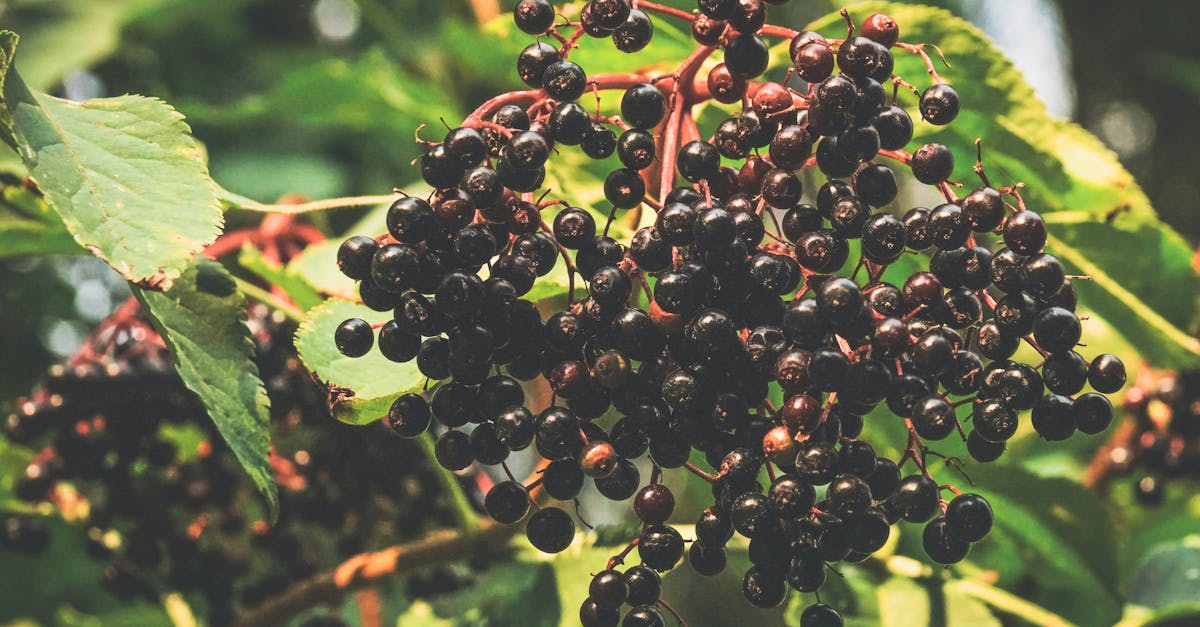
Elderberries bloom in June, with big, flat clusters of creamy-white flowers, and the berries ripen in late summer, mostly in August. Harvest whole clusters when every berry is dark purple, cutting them off with scissors or pruners. Strip the berries from the stems with a fork, and throw out all the stems and any unripe green berries.
The leaves, stems, roots and unripe berries are toxic. Only the flowers and the ripe berries are used, and the berries must always be cooked: raw elderberries can upset your stomach.
You can also pick some of the flower clusters in June and dry them for tea. Each cluster you pick is one less cluster of berries, so leave plenty.
Storing and preserving
Fresh elderberries don’t keep long, so cook or freeze them soon after picking. To freeze, spread the berries on a tray, freeze, then bag them; frozen berries and cooked syrup keep for up to a year. Cook them into syrup, jelly, juice or wine, or dry the berries to cook with later.
Winter
Elderberries are native here and need no winter protection beyond their usual mulch. They bloom in June, well after our last frost, so a late freeze won’t cost you the crop. Late winter is the time to prune.