Growing Gooseberries
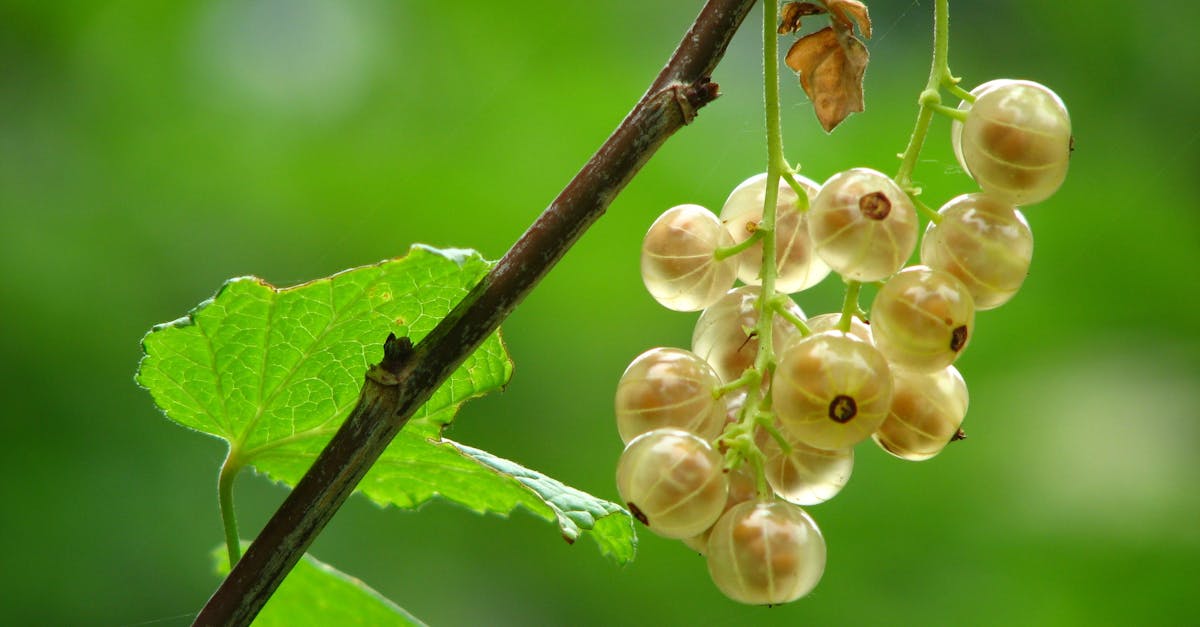
Gooseberries are compact, long-lived shrubs with round berries in green, red or purple, tart or sweet depending on the variety and how ripe you pick them. They’re one of the first fruits of summer here in Southwest Missouri (Zones 6b–7a), ripening in June ahead of the blackberries and blueberries. They like cool roots, so thick mulch, a little afternoon shade and a yearly winter pruning are most of what they need.
At a glance
- Sun: full sun to part sun, 6 or more hours a day; afternoon shade helps in summer
- Water: moderate; about 1–1.5 inches a week, kept steady
- Soil pH: 5.5–7.0
- Plant: nursery plants or bare-root, in early spring while dormant, or in fall
- Spacing: 3–5 feet apart
- Size: 3–5 feet tall and wide
- Harvest: June into July, starting in 2–3 years
- Yield: 8–10 pounds per mature bush; bushes bear for 15–20 years
- How many: 1–2 bushes for a family of four to eat fresh, 3–4 if you plan to preserve
- Containers: yes, in a 10–15 gallon pot
Varieties that do well here
Gooseberries come in two main types. American gooseberries (Ribes hirtellum) have smaller fruit but stand up better to powdery mildew. European gooseberries (Ribes uva-crispa) have larger, more flavorful fruit but are more prone to disease.
Our favorites for Southwest Missouri:
- Pixwell: a hardy, dependable variety that’s nearly thornless.
- Hinnomaki Red: sweet red berries with good mildew resistance.
- Invicta: a very productive green gooseberry with strong mildew resistance.
Poorman, with sweet red fruit, and Captivator, a nearly thornless red, are good choices too. Gooseberries are self-fertile, so one bush will fruit on its own, but a second variety nearby improves yield and berry size.
When to plant
Plant bare-root gooseberries in early spring, in March or early April, while they’re dormant and the soil is 45–65°F. They’re hardy, so there’s no need to wait for our average last frost around April 10. Potted plants can go in a little later. Fall planting, in October or November once the plants are dormant, also works in well-drained soil.
Soil and site
Gooseberries want fertile, loamy soil that holds moisture but drains well. Work in compost before planting, and avoid very dry or sandy spots. Heavy clay needs plenty of compost to drain well enough.
Give them at least 6 hours of sun. They take more shade than most fruiting shrubs, and afternoon shade keeps the leaves from scorching in our summer heat.
Keep them away from black walnut trees, whose roots release juglone, a compound that harms many plants, and from white pines. Gooseberries can carry white pine blister rust, a disease that damages the pines.
Planting
- Soak bare-root plants in a bucket of water for 2–6 hours before planting.
- Dig a hole two to three times as wide as the roots and only as deep. Set the plant at the same depth it grew in the nursery.
- Space bushes 3–5 feet apart.
- Water well, then mulch.
Water, mulch and feeding
- Water regularly while the plants get established, and keep the soil evenly moist, especially while the fruit is developing. Avoid soggy, waterlogged soil.
- Water at the base with a drip line or soaker hose to keep the leaves dry and disease down.
- Mulch thickly, 2–4 inches of straw, wood chips or leaves. Like currants, gooseberries prefer cool roots, and mulch keeps them cool, holds moisture steady and stops soil from splashing onto the leaves.
- Feed in early spring, before new growth starts, with compost or a light balanced fertilizer (10-10-10). Stop feeding by August.
Pruning
Prune in late winter, while the bushes are dormant. The goal is a bush of 9–12 stems of mixed ages, none older than 3 years.
- Cut out stems older than 3 years.
- Each winter, keep 3–4 of the strongest new shoots and remove the rest, so the bush renews itself.
- Remove weak, damaged or crossing stems, and thin a crowded center so air can move through.
The first winter after planting, just remove weak or damaged stems.
Good neighbors
Elderberries, currants, chives, garlic, yarrow, bee balm and calendula grow well with gooseberries, helping deter pests and bringing in pollinators. Calendula, cosmos and alyssum are good flowers to plant nearby for pollination. Keep gooseberries away from black walnut trees and white pines.
Pests and diseases
Pests
- Imported currantworm (gooseberry sawfly): green larvae that eat the leaves down to the veins in spring. Check the undersides of the leaves in April and hand-pick them; catching them early prevents most of the damage.
- Aphids: feed on new growth and curl the leaves. Spray them off with water, or use insecticidal soap or neem oil.
- Birds: eat ripening fruit. Cover the bushes with bird netting if they become a problem.
Diseases
- Powdery mildew: a white coating on the leaves and fruit, common in humid weather. Grow resistant varieties such as Invicta and Hinnomaki Red.
- Leaf spot: dark spots on the leaves. Remove infected leaves, rake up fallen ones in fall, and water at the base.
Good spacing, airflow, yearly pruning and watering at the base prevent most of these.
Harvest
Gooseberries bloom in early April and ripen from June into July. For cooking and preserves, pick them slightly underripe, while they’re still firm and tart. For eating fresh, let them ripen fully and soften. Ripe color depends on the variety: green, red, purple or yellow. Wear gloves for thorny varieties, and pick every few days.
Storing and preserving
Refrigerate fresh gooseberries for up to 1–2 weeks, and wash them just before using. To freeze, spread whole berries on a tray, freeze, then bag them. Their tartness and natural pectin make them great for jam, pie filling, chutney and gooseberry fool.
Winter
Gooseberries are very cold-hardy and need nothing more than a fresh layer of mulch in late fall. The risk comes in spring: they bloom in early April, before our average last frost. If a night below 28°F is forecast while they’re in bloom, cover the bushes with frost cloth, and water the ground the day before; moist soil holds and gives off more heat.