Growing Cotton
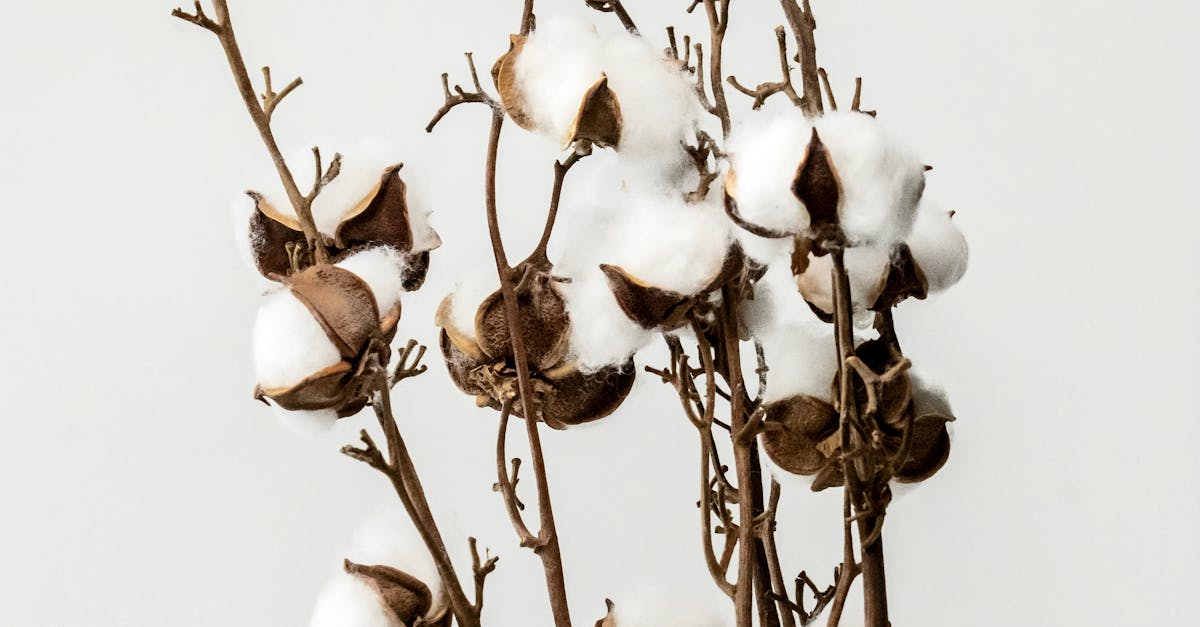
Cotton (Gossypium hirsutum) is a heat-loving plant grown for the soft fiber in its bolls. Be realistic about it here: Missouri’s cotton crop is grown in the Bootheel, which MU Extension still calls a short-season area for cotton, and Southwest Missouri (Zones 6b–7a) is cooler, with a shorter season, than that. A short row makes a fine curiosity or a little fiber for hand spinning, but expect some of the bolls to still be green when frost comes.
At a glance
- Sun: full sun; the hottest spot you have
- Water: steady while seedlings establish and while flowering; fairly drought tolerant otherwise
- Soil pH: 6.0–7.0
- Sow: directly in the garden, around mid-May
- Depth: ½–1 inch, never deeper than 1½ inches
- Spacing: 3–4 plants per foot of row, rows 38–40 inches apart
- Flowers: about 60–70 days after planting
- Harvest: as the bolls open, from late summer or early fall until frost
Varieties
Grow upland cotton, and pick the earliest-maturing variety you can find. Every week you save at the end of the season counts this far north.
When to plant
Around Springfield the average last spring frost is about April 10, and the first fall frost comes around October 22. Cotton needs warm soil: seed planted into cold, wet ground rots or comes up weak.
- Sow in May, aiming for around May 15. Wait until the soil is above 65°F at 3 inches deep and the 5-day forecast shows no nights below 50°F.
- Sow directly where the plants will grow. Cotton puts down a long taproot and doesn’t transplant well.
It helps to know the timeline. In the Bootheel, cotton planted May 1 starts flowering in early July, the first bolls crack open around August 20, and picking starts in late September. Each flower takes about 50 days to become an open boll, and that slows as September nights cool. So here, count on the flowers that open by about mid-August; later ones are unlikely to make it before frost.
Soil and site
Give cotton your sunniest, warmest spot and well-drained, loamy soil. Avoid low, wet ground, which stays cold and soggy in spring. If your soil is heavy clay, work in compost or plant in a raised bed, and loosen it 8–10 inches deep. Have the soil tested and lime only if the test calls for it.
Planting
- Sow seed ½–1 inch deep into moist soil, never deeper than 1½ inches.
- Space rows 38–40 inches apart, and thin seedlings to 3–4 plants per foot of row.
- Water after sowing if the soil is dry. Seedlings come up in about 7–11 days.
Missouri’s boll weevil rules let the Missouri Department of Agriculture require anyone growing cotton, even a few ornamental plants, to register where it’s planted. If you have questions, ask the department’s Plant Industries Division.
Water, weeds and feeding
- Water regularly while the seedlings establish and again while the plants flower and set bolls. In between, cotton handles dry spells well. Stop watering once the first bolls crack open.
- Weeds are the early-season problem: cotton grows slowly at first, and weeds get ahead of it. Hoe or hand-weed, and mulch once the plants are up.
- Feed according to a soil test. If you add nitrogen, split it: some at planting and the rest when the first flower buds (squares) appear. Too much nitrogen gives big, leafy plants that set their bolls late, and with our season you can’t afford late.
Pests and diseases
Pests
- Thrips: tiny insects that scar and crinkle the first leaves of seedlings. Check plants from the day they come up.
- Cotton aphids: cluster under the leaves. Spray them off with water or use insecticidal soap.
- Bollworms: caterpillars (the same insect as the corn earworm) that bore into flower buds and bolls. Pick them off by hand.
- Plant bugs and stink bugs: feed on squares and young bolls, which then drop off or rot.
- Spider mites: speckled leaves and fine webbing in hot, dry weather.
Diseases
- Seedling diseases: seedlings rot or die off in cool, wet soil. Waiting for warm soil and planting in well-drained ground are the best defense.
Warm soil at planting, good drainage and steady checking for pests prevent most problems.
Harvest
A boll is ready when it has split open and the fluffy cotton inside has dried and puffed out. Pick on a dry day by pulling the cotton out of the boll; the seeds come with it. Go over the plants every week or so as more bolls open. Open cotton left out in the rain loses quality, so don’t let it sit.
Bolls that are still small and green when frost comes won’t mature.
Ginning and storing
The cotton you pick is full of seeds. Separating them from the fiber is called ginning. For a garden-sized crop, pull the seeds out by hand; if you grow more, a small hand-cranked gin speeds it up. Store the clean fiber dry, in paper or cloth bags, until you’re ready to card and spin it. Save some seed somewhere cool and dry if you want to plant again next year.