Growing Butternut Squash
Butternut squash (Cucurbita moschata) is a winter squash: you let it ripen fully on the vine, then cure it and store it for the months ahead. It’s one of the most reliable squashes to grow here in Southwest Missouri (Zones 6b–7a), largely because its solid stems hold up to squash vine borers, the pest that kills so many other squash plants. Give it room to run, rich soil and steady water, and a few vines will keep you in squash all winter.
At a glance
- Sun: full sun, 6–8 or more hours a day
- Water: heavy; deep and steady
- Soil pH: 6.0–6.8
- Start: direct sow (simplest), or start indoors 3–4 weeks ahead in biodegradable pots
- Spacing: 3–4 feet apart, rows 4–8 feet apart
- Sow: May to mid-June, 1 inch deep, once the soil is 65°F or warmer
- Harvest: late September and October, before the first frost; about 100 days from sowing
- How many: 2–3 plants per person for fresh eating, 4–6 if you want squash to store
- Containers: not recommended; the vines need room to run
Varieties that do well here
- Waltham Butternut: our favorite. It’s the standard butternut, its solid stems resist vine borers, and it stores all winter.
- Butternut Supreme: buff skin, pale orange flesh and a blocky shape with a thick neck.
- Early Butternut: ripens earlier on compact vines, a good choice for a smaller garden.
Butterboy, with reddish-orange flesh and good flavor, is another one to try.
When to plant
Around Springfield the average last spring frost is about April 10, and the first fall frost comes around October 22. Squash can’t take any frost and stalls in cold soil, so wait for real warmth.
- Sow outdoors in May, once the soil has warmed to 65°F, or as late as early to mid-June. Butternut needs about 100 days, so a May or early June sowing gives the fruit time to ripen fully before frost.
- Start indoors if you like, 3–4 weeks before planting out. Use biodegradable pots, since squash dislikes having its roots disturbed, and transplant before the roots crowd the pot.
Soil and site
Pick a sunny, open spot with plenty of room for the vines to run. Squash are heavy feeders, so work in compost generously and aim for rich, well-drained soil with a pH of 6.0–6.8. Planting on low mounds improves drainage and warms the soil, which helps in heavy clay. Plant where no squash, pumpkins, cucumbers or melons grew last year.
Planting
- Sow 2–3 seeds 1 inch deep at each spot and thin to the strongest seedling once they’re up. Seeds sprout in 5–10 days.
- Space plants 3–4 feet apart, in rows 4–8 feet apart.
- Water well after planting.
- Cover young plants with row cover to keep squash bugs and cucumber beetles off. Take it off when the flowers open so bees can get in.
Water, feeding and pollination
- Water deeply at the base of the plant, about an inch a week and more in hot, dry spells. Keep the leaves dry. Steady moisture while the plants flower and set fruit keeps young squash from dropping.
- Mulch with straw or grass clippings to hold moisture and keep weeds down while the vines are young.
- Feed with compost at planting, and side-dress with more compost when the vines begin to run.
- Pollination: squash has separate male and female flowers on the same vine. The female flower has a small swelling at its base that becomes the squash; without enough bee visits, it shrivels and drops. Male flowers usually open first. If fruit isn’t setting, brush pollen from a male flower onto the center of a female flower in the morning. Borage and bee balm nearby bring in bees, and you should avoid spraying anything while the vines are in bloom.
Good neighbors
Corn, beans, marigolds and nasturtiums all grow well with squash. Corn gives vining types something to climb, and with beans and squash it makes up the traditional Three Sisters planting. Marigolds and nasturtiums help repel squash bugs. Keep squash away from potatoes and cucumbers, which compete for nutrients or share pests and diseases.
Pests and diseases
Pests
- Squash bugs: gray-brown bugs that suck sap and can make vines wilt and collapse. Check the undersides of the leaves and crush the bronze egg clusters every day.
- Squash vine borers: larvae bore into the stem near the base, and the vine suddenly wilts. Butternut’s solid stems resist them far better than most squash. Burying a vine node or two, so the plant roots in more than one spot, gives it a backup.
- Cucumber beetles: chew leaves, flowers and fruit, and spread bacterial wilt as they feed. Hand-pick them in the cool of the morning.
Diseases
- Powdery mildew: a white, powdery coating on the leaves, worst in humid weather with poor airflow. By late summer most squash patches have some. A diluted milk or baking soda spray, started early, slows it.
- Bacterial wilt: the plant wilts suddenly and dies. Cucumber beetles spread it.
- Blossom end rot: dark, sunken spots on the end of the fruit, caused by uneven watering.
Most of these are prevented the same way: plant squash in a new spot each year, use row covers early to block egg-laying pests, water at the base, and space plants for good airflow.
Harvest
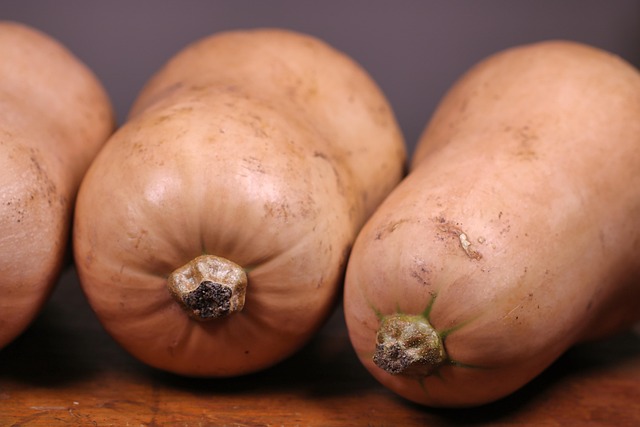
Butternut is ripe when the skin has turned an even, deep tan, the rind resists your fingernail, and the stem is dry and corky. Cut the squash from the vine with pruners or a sharp knife, leaving 1–2 inches of stem, and never carry it by the stem. Bring in every ripe squash before the first frost, around October 22, since frost damages the fruit. Handle them gently: a bruised or nicked squash won’t keep, so eat those first.
Curing
Cure butternut before you store it. Keep it somewhere warm (80–85°F) and dry for about 10 days. Curing heals small scratches and toughens the skin so the squash keeps for months.
Storing and preserving
Store cured squash at 50–55°F somewhere dry with good airflow, such as a cool basement or closet. Don’t refrigerate it; the cold makes it spoil sooner. Set the squash out in a single layer so they don’t touch, and check them now and then for soft spots. Well-cured butternut lasts all winter.
To preserve it, freeze cooked, mashed squash, pressure can it in cubes (never as a purée), or dehydrate it.