Growing Parsnips
Parsnips are a slow, cool-season root crop: you sow them in early spring and dig them from late fall into winter, after frost has turned some of their starch to sugar. They grow well here in Southwest Missouri (Zones 6b–7a) in deep, loose soil. The two things that matter most are fresh seed and a seedbed that stays moist for the 2–3 weeks they take to come up.
At a glance
- Sun: full sun; tolerates a little shade
- Water: about 1 inch a week, kept even
- Soil pH: 6.0–7.0
- Sow: directly in the garden, late March to early April
- Depth: ¼–½ inch
- Sprouts: in 10–21 days
- Spacing: thin to 2–4 inches apart, rows 18–24 inches apart
- Harvest: 100–150 days after sowing; best after a few frosts, from late fall through winter
- How many: 10–15 feet of row per person; 10 feet of row gives about 10 pounds
Varieties that do well here
- Hollow Crown: the classic heirloom, with long, tapered roots. It’s slow to sprout, so be patient.
- All America: large, tapered roots.
Other good choices are the hybrids Gladiator, with smooth roots and good disease resistance; Albion, a high yielder with good flavor; and Javelin, which grows uniform roots that store well.
When to plant
Around Springfield the average last spring frost is about April 10, and the first fall frost comes around October 22. Parsnips are hardy, so sow them before the last frost: late March to early April, as soon as the soil can be worked.
Parsnip seed only stays good for 1–2 years, so buy fresh seed each spring. Even fresh seed is slow, taking 10–21 days to sprout, and it won’t come up if the top of the soil dries out in the meantime.
Soil and site
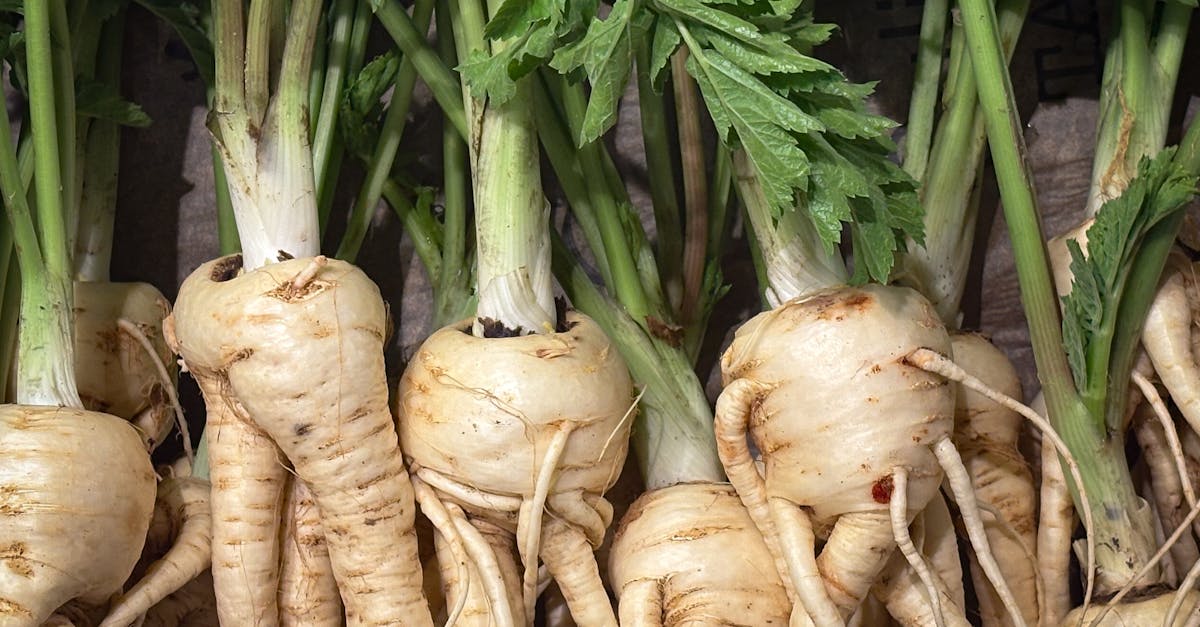
Parsnip roots grow 8–12 inches long, so they need deep, loose, stone-free soil with plenty of organic matter. Loosen the bed at least 12 inches deep. Rocks, clods, compacted soil and fresh manure all cause forked, stunted roots. In our heavy clay, a raised bed filled with loose soil and compost is the easiest fix. Full sun is best, though parsnips put up with a little shade.
Planting
- Sow seeds about ½ inch apart and ¼–½ inch deep, in rows 18–24 inches apart. Sowing thickly makes up for slow, uneven germination.
- Firm the soil lightly and water gently. Keep the surface moist every day until the seedlings are up.
- Thin to 2–4 inches apart once the seedlings are 2–3 inches tall. Snip the extras at the soil line with scissors rather than pulling them, so you don’t disturb the roots of the ones you keep.
Water, mulch and feeding
- Water about an inch a week, and up to 1½–2 inches in the July and August heat. Steady moisture keeps the roots from turning tough or splitting.
- Mulch lightly once the seedlings are up. Parsnips grow slowly at first and weeds can swamp them, so keep the row weeded too.
- Feed lightly. Parsnips don’t need much: compost worked in before sowing is usually enough. Skip high-nitrogen fertilizer and fresh manure, which give you big tops and forked roots.
Good neighbors
Onions, garlic and other alliums are good neighbors for parsnips; they help deter carrot flies, which go after parsnips too. Keep parsnips away from their relatives, carrots and celery, which share their pests.
Pests and diseases
Pests
- Carrot flies: the larvae tunnel into the roots and leave rust-colored trails. Cover the row with floating row cover right after sowing.
- Aphids: cluster on the leaves. Spray them off with water or use neem oil.
- Wireworms: bore into the roots. They’re most common in ground that was recently lawn or pasture.
Diseases
- Leaf blight: brown spots on the leaves that sap the plant’s vigor, worst in humid weather.
- Root rot: comes from poorly drained soil, another reason raised beds help.
Rotating where you plant parsnips and carrots, watering at the base and leaving room for air to move prevent most problems.
Harvest
Parsnips are ready 100–150 days after sowing, when the roots are 1–2 inches across at the top. They taste best after a few hard frosts, so most gardeners start digging in late fall.
Dig, don’t pull. Loosen the soil alongside the row with a garden fork first, then lift the roots out gently; long roots snap if you yank on the tops.
Storing and preserving
Cut off the tops and don’t wash the roots until you use them. They’ll keep 2–3 weeks in the refrigerator crisper. For longer storage they want cold, moist conditions, 32–40°F with 90–95% humidity, such as a box of damp sand or sawdust in a root cellar. Keep them away from apples and pears. Parsnips also freeze well blanched, and dried slices are handy for soups and stews.
Winter
You don’t have to dig them all in fall. The roots keep in the ground over winter: once the ground turns cold, mulch the row with about 12 inches of straw and dig as you need them all winter. Dig the last of them in early spring, before new tops start to grow, or the roots turn woody.